What it's about
The CPM device does not trigger dangerous muscle activation after rotator cuff surgery.
Patients actively moved against the device without noticing it.
The shoulder CPM device performed better than pendulum exercises in patient evaluations.
Compensatory movements of the shoulder remained significantly smaller with CPM than with conventional exercises.
The study measured muscles, movement, and patient satisfaction simultaneously, a methodological difference from previous studies.
Can you use a motorized shoulder CPM device after rotator cuff surgery at all? Patients, physiotherapists, and surgeons alike ask themselves this question. An Austrian in-vivo study has now answered it with real measurement data from operated patients.
Why this study was necessary
After arthroscopic rotator cuff reconstruction, rehabilitation faces a classic dilemma. The shoulder needs early movement to prevent scarring and keep the joint capsule mobile. At the same time, the freshly sutured tendon must not be stressed by muscle pull. Early passive mobilization without active muscle work is the goal, and that is exactly what the motorized shoulder CPM device was developed for.
But until now, had it really been proven that these devices actually achieve this? That the shoulder is truly moved passively, the muscles remain quiet, and the movement stays within the approved range, even when the device is not adjusted to the millimeter at home? The study by the Motum Human Performance Institute in cooperation with Gelenkpunkt Innsbruck investigated exactly that.
What was measured, and how?
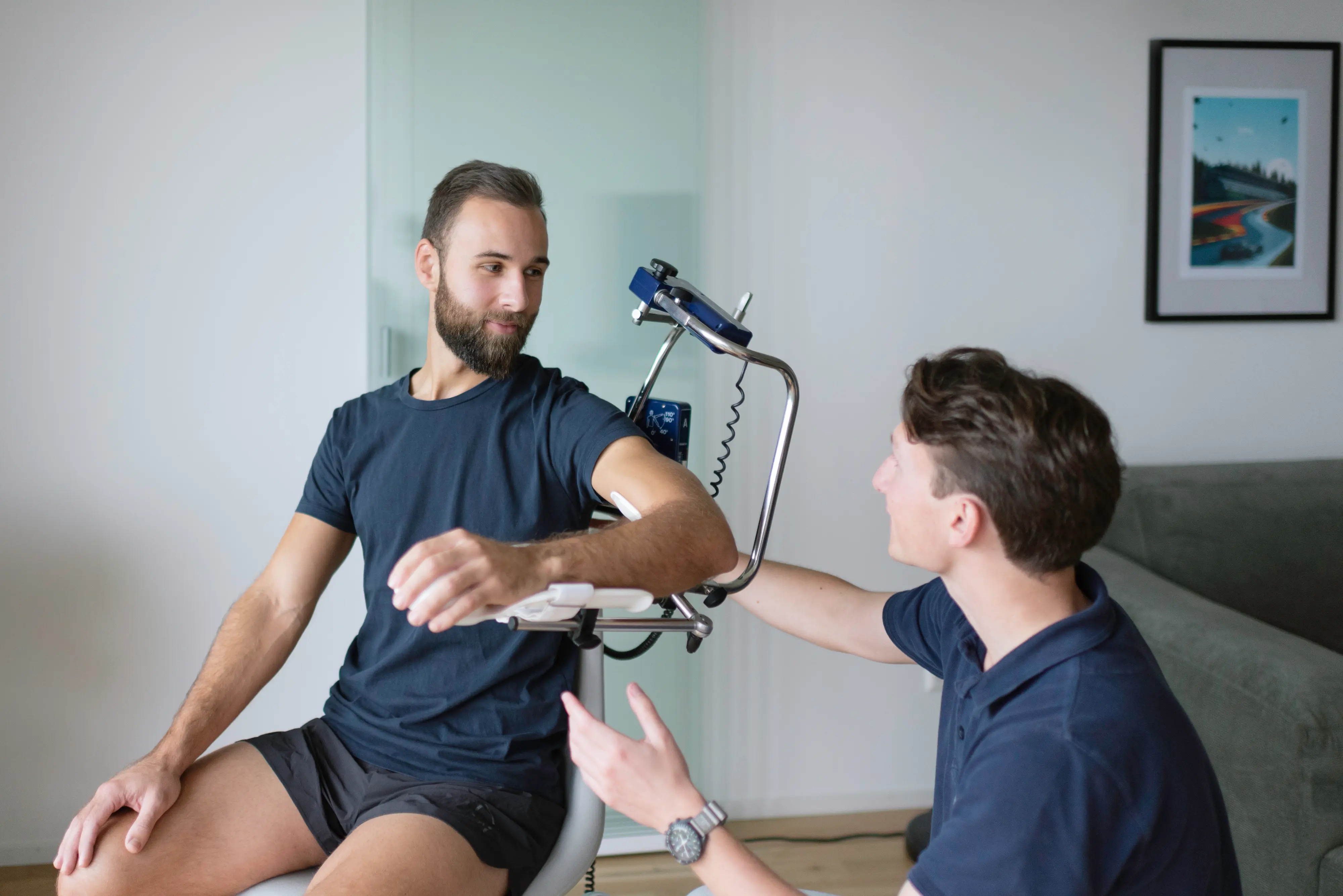
The study examined 13 female and male patients, with an average age of 57, around 13 days after arthroscopic rotator cuff surgery. Importantly, these were real, recently operated patients, not a healthy test cohort. The healthy opposite side served as a comparison.
The researchers around Julia Scharbert systematically compared two things:
Operated versus healthy shoulder, to see whether the recently operated side behaves differently.
Optimal versus deliberately shifted device setting, with deviations in height adjustment of minus 4 cm, minus 2 cm, plus 2 cm, and plus 4 cm, to test the tolerance in the setting.
Three levels were recorded simultaneously:
Compensatory movements (3D kinematics): How much do the shoulder and upper body deviate from a clean movement path? Recorded with a ten-camera system.
Muscle activation (surface EMG): How much do four shoulder muscles (deltoid, upper and middle trapezius, pectoralis major) work on both sides?
Patient feedback: Pain and comfort during movement, and later also the experience during home use.
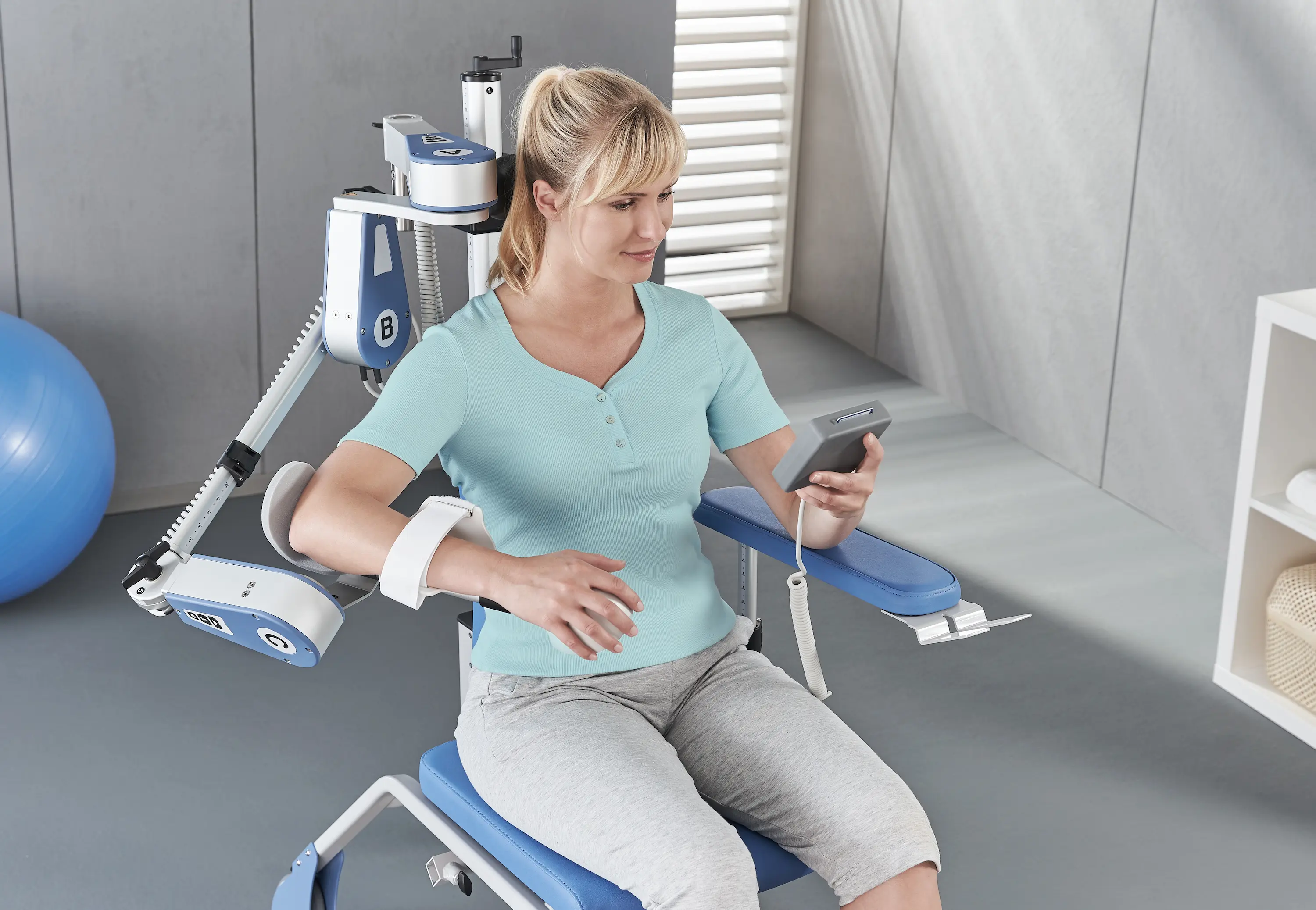
This combination of biomechanics, muscle measurement, and the patient perspective makes the study methodologically strong. Many earlier investigations looked at only one of these aspects. The CPM device used was the ARTROMOT-S3.
The key results at a glance
Measurement parameter | Operated side | Healthy side | Meaning |
|---|---|---|---|
Actual movement vs. device | always below the device | always below the device | within the safe range |
Muscle activity during rotation | below the resting value | below the resting value | fully passive |
Compensatory movement during elevation | 1.86 cm | 1.49 cm | small, clinically insignificant |
Upper body inclination during elevation | 1.59 degrees | 1.14 degrees | minimal |
The picture is consistent: In every setting, the shoulder moved less far than the device specified and clearly remained within the limits approved by the surgeon (up to 90 degrees during lateral elevation). The operated side showed slightly more compensatory movement than the healthy side, but the differences were so small that they had no clinical relevance. Over the ten minutes of recording, compensatory movement on the operated side even decreased.
Does the movement really remain passive?
Here the study provides a nuanced answer. During rotation of the shoulder, every single one of the four measured muscles on both sides remained below the resting value. The shoulder was therefore completely relaxed, and the movement was purely passive.
During lateral elevation, two muscles, the deltoid and the upper trapezius, showed measurable activity. This is normal when lifting against gravity and was well below what voluntary contraction would produce. The pectoralis major and the middle trapezius remained below the resting value. The key point: There was no statistically significant difference between the operated and healthy sides, and no muscle reached a level that would endanger the fresh suture.
In the words of the study, the movement was therefore predominantly passive. Fully passive during rotation, with low and harmless residual activity during elevation.
The truly exciting finding: Tolerance in the setting
In the laboratory, the device was aligned with camera support to the millimeter, meaning much more precisely than can ever be achieved in the clinic or at home. For this reason, the researchers deliberately tested the tolerance and intentionally shifted the setting up and down by up to 4 cm.
The result is the most valuable aspect of the entire study for practice: The misalignment had almost no influence on movement and compensatory behavior. Only with the strongest upward deviation (plus 4 cm) did the range of motion during elevation increase slightly, from around 30 to 34 degrees. This value also remained below the movement specified by the device itself and clearly within the safe range.
In concrete terms, this means: The small setting inaccuracies that are unavoidable during home use do not make mobilization unsafe. Until now, exactly this had not been proven.
What does this mean for rehab after shoulder surgery?
The study provides a solid argument for the early use of a motorized shoulder CPM device directly after surgery. Not as a replacement for physiotherapy, but as a controlled mobilization tool in the first few weeks, when active exercises are not yet permitted.
What the study specifically supports:
The use of a CPM device is functionally safe in the early phase after rotator cuff reconstruction.
The movement remains within the approved limits, even with an inaccurate setting of up to 4 cm.
Muscle activation remains at a level that does not endanger the suture.
Pain and discomfort are low. In the laboratory, both values were consistently below 1 out of 10.
After four weeks of home use, mobility during lateral elevation improved noticeably, from around 37 to 46 degrees. As expected, rotational movement remained almost unchanged in this early phase. Pain during use decreased from 1.8 to 0.2 out of 10. Handling was rated as very good by 82 percent, and willingness to use the device again or recommend it was 9.1 out of 10. No one felt unsafe during use.
Brief classification: What the study can and cannot do
Every study has its limitations, and it would not be honest to conceal them.
This is a small laboratory study with 13 people and level of evidence IV. It demonstrates safety and feasibility, not a high-quality efficacy outcome.
Surface EMG records only superficial muscles. The sutured tendon itself, the supraspinatus, could not be measured directly. The study explicitly names this as a limitation and explains why isolated high activity of this muscle is nevertheless unlikely.
Long-term outcomes such as healing rate or function after 6 or 12 months were not part of the investigation.
The recommended duration of use was around 3 hours per day. Modern rehab pathways sometimes use shorter periods.
The devices and measurements were financed by the device manufacturer. According to the study, this had no influence on analysis, interpretation, or publication.
What the study does very well: It answers the question of the functional safety of a shoulder CPM device with real measurement data from operated patients. This had not previously existed in this form.
Which devices are used in practice?
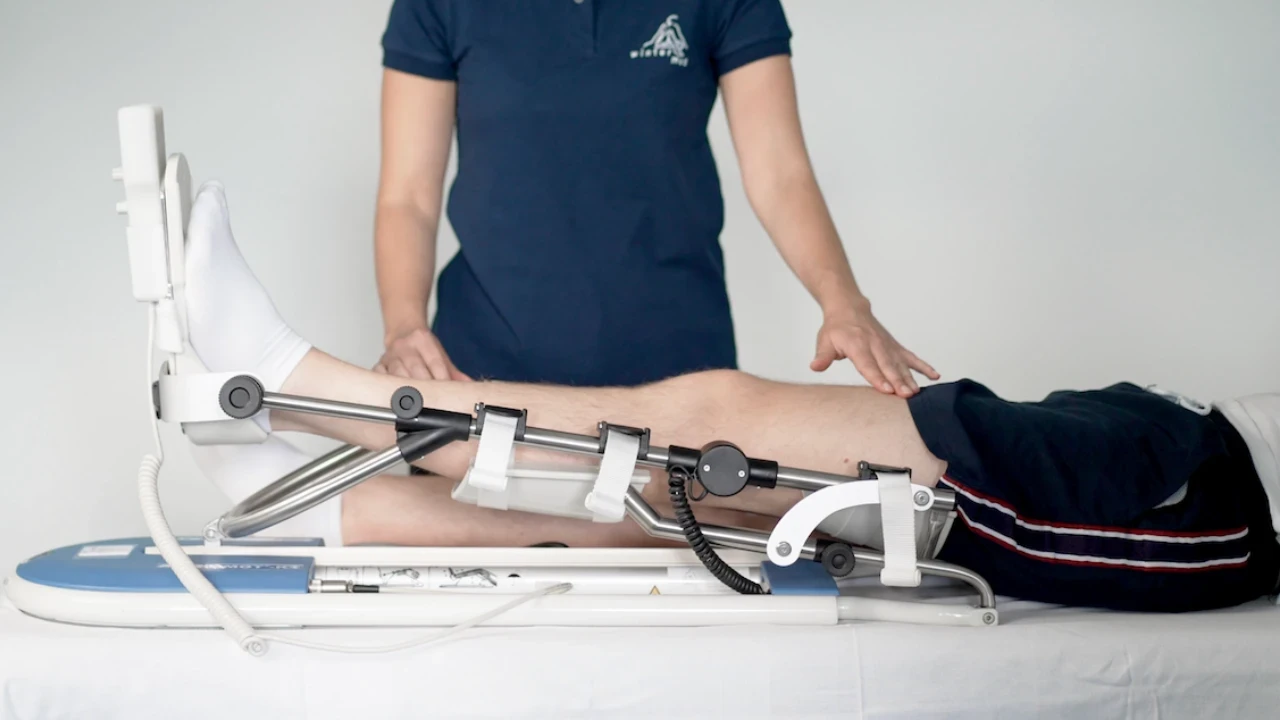
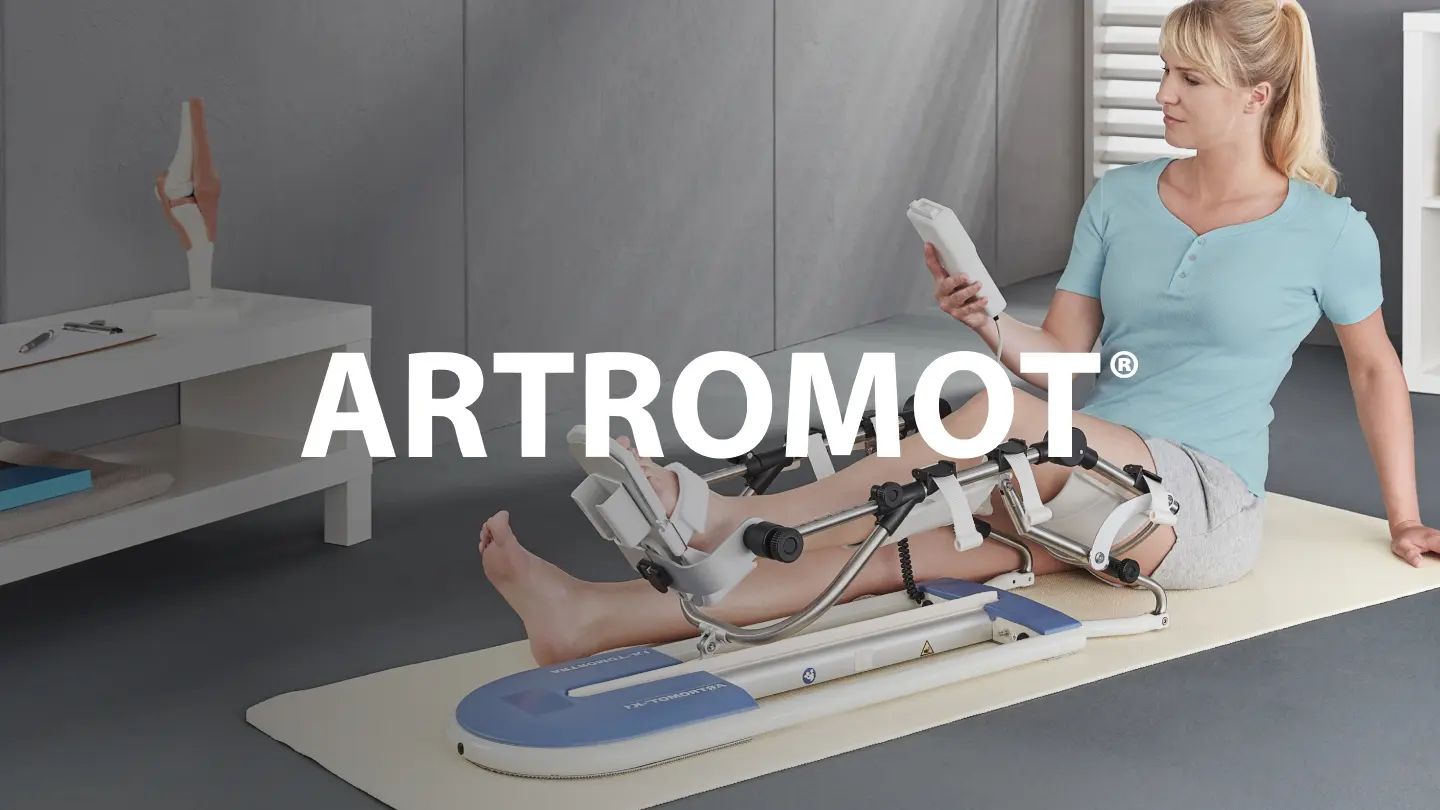
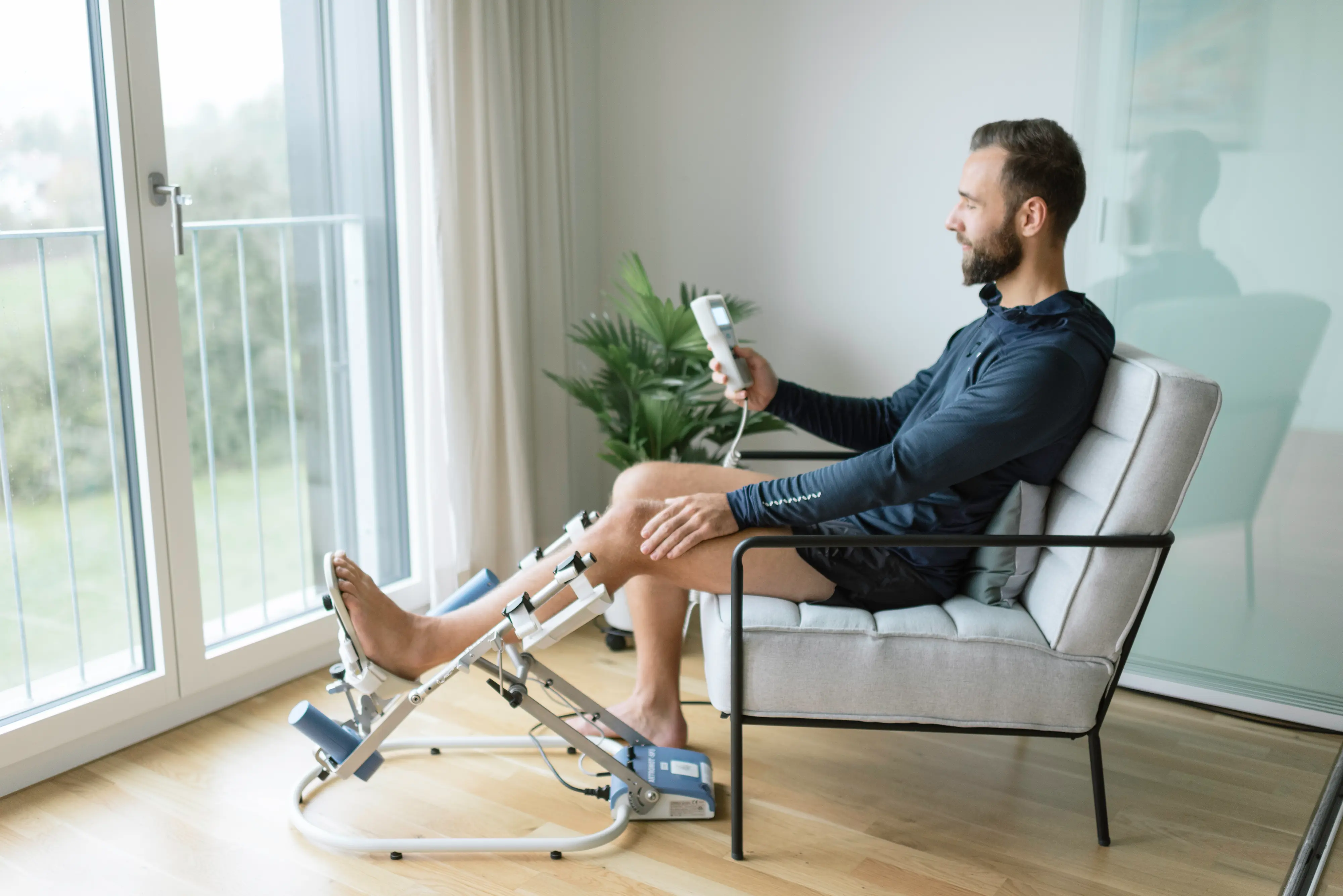
For postoperative mobilization of the shoulder at home, motorized CPM devices such as the ARTROMOT S3 and S4 or Kinetec models are used. These devices guide the shoulder through controlled abduction and flexion movements, exactly the movements measured in the study.
If you would like to learn more about the difference between these devices, read the comparison article ARTROMOT S3 vs. S4: Which device fits shoulder rehab?. For the rental of a shoulder CPM device directly after surgery, you can use the order form for the shoulder rental service.
Anyone who would like basic information about the process of CPM therapy after shoulder surgery will find a structured overview in the guide to shoulder rehabilitation with CPM therapy.
Conclusion: The study confirms what many rehab experts suspected
The investigation by Scharbert and colleagues is not a revolutionary breakthrough, but it is exactly what rehabilitation after shoulder surgery needed: solid, measurable evidence that a motorized CPM device works safely in the early phase.
The combination of low compensatory movements, low muscle activation, robustness against setting errors, and consistently positive patient feedback creates a coherent picture. The CPM device does what it is supposed to do: It moves the shoulder in a controlled way without stressing the tendon, even when the setting at home is not perfect.
For anyone considering a motorized CPM device after shoulder surgery, the evidence supports it.
Frequently asked questions about the CPM device after shoulder surgery
Is a CPM device really necessary after rotator cuff surgery? Not in every case, but for many patients it is a safe way to mobilize the shoulder in the first postoperative weeks without risking active muscle work. The study shows that the device performs this task reliably and within safe limits.
Can I use the device at home? Yes. Motorized shoulder CPM devices such as the ARTROMOT S are designed for home use. WINTER Medizintechnik delivers the devices directly to your home, including a personal introduction. The study also indicates that small setting inaccuracies in everyday use do not compromise safety.
How long is the CPM device used? This depends on the type of surgery and the surgeon's treatment plan. The device is often used during the first 4 to 6 weeks after surgery. In the study, the recommended use was around 3 hours per day.
Does the movement really remain passive? During rotation of the shoulder, yes; here, all measured muscles remained below the resting value. During lateral elevation, two muscles showed low activity, but it was far below voluntary contraction and did not endanger the suture.
Source: Scharbert J., Strutzenberger G., Hainzer L., Baumert P., Braun S. Can a shoulder continuous passive motion device be considered functionally safe after rotator cuff repair? The Hive Musculoskeletal Journal, 2026. DOI: 10.70885/hmsj.2026.03.002. This article is for general information and does not replace medical advice.