What it's about
A randomized study shows: patients who received physiotherapy plus a CPM device at home after knee replacement achieved better knee flexion than after inpatient rehab without one.
Patient questionnaires show noticeably better everyday function in the group with the CPM device.
Several short sessions per day are more effective than one long application.
The device can begin as early as in the hospital and be continued seamlessly at home.
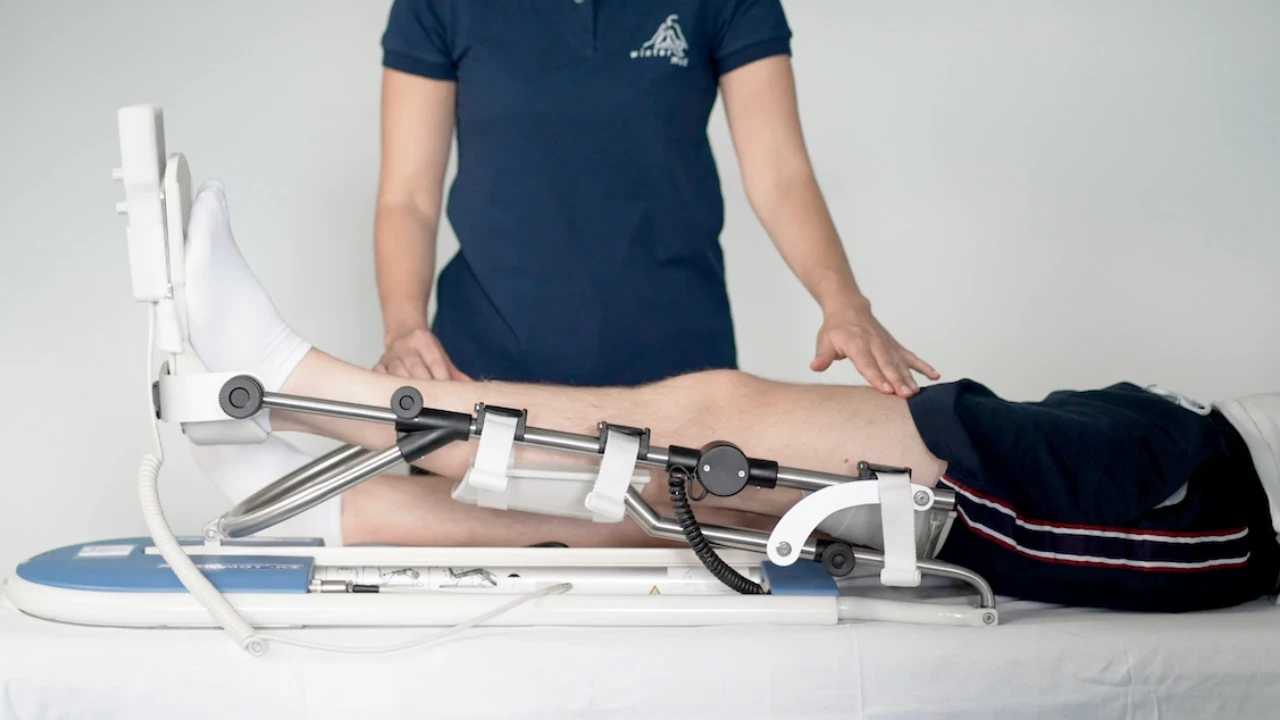
Kinetec models differ in range of motion: from -10° to 120°, depending on the device.
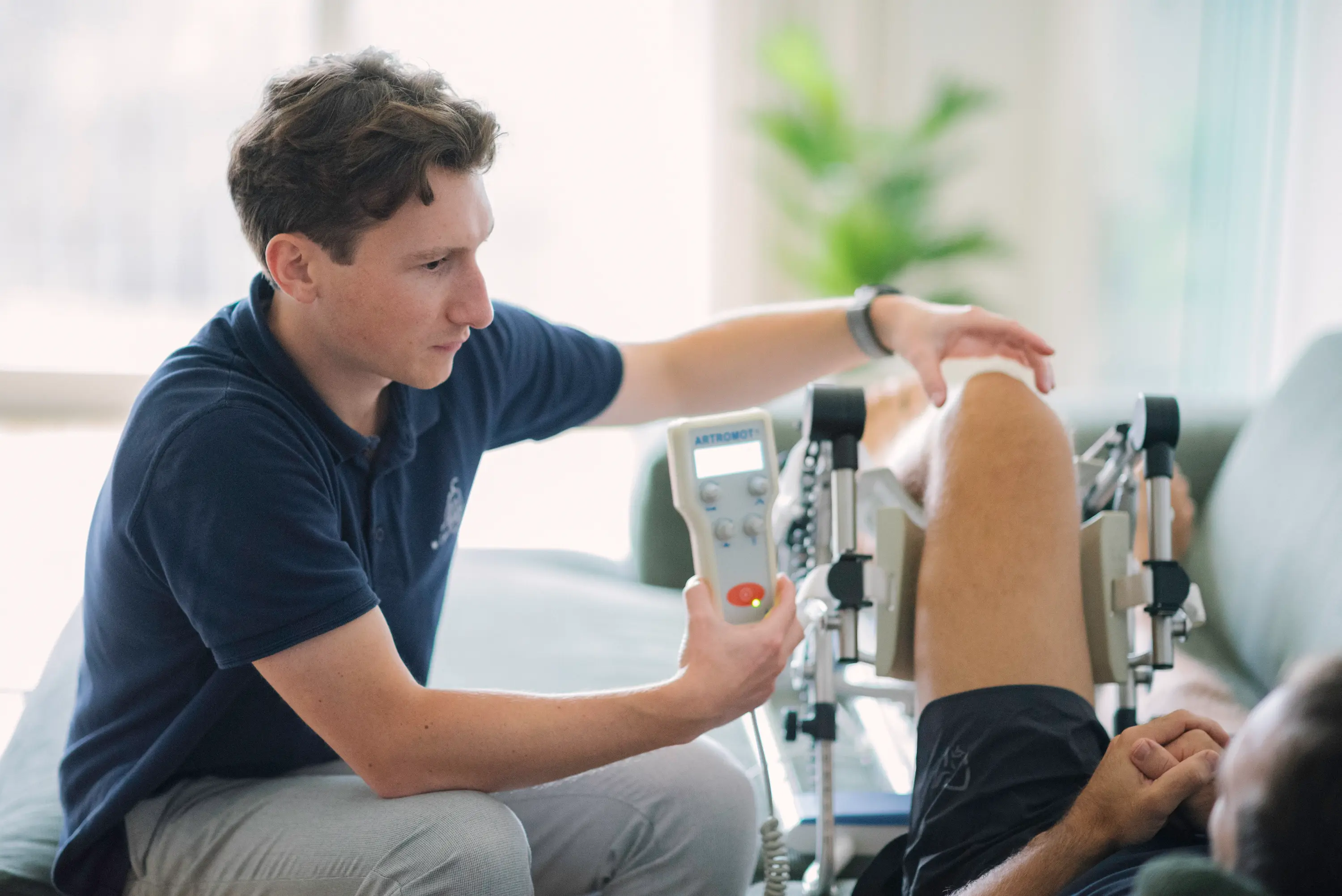
After knee surgery, the goal is clear: to stand safely, walk, and practice stairs again as quickly as possible. At the same time, the knee is often swollen, sensitive, and may not yet be fully weight-bearing at first. In this phase, motion therapy with a Kinetec knee CPM device can be a useful support.
A Kinetec knee CPM device moves the knee slowly and in a controlled manner, without you having to use your own strength. That sounds simple, but it can make a big difference in everyday life: you get into a good movement rhythm earlier, even when active training is still difficult.
Knee CPM device: What studies say about it
Bending better again sooner
A randomized study of 80 patients after knee replacement compared two rehab pathways: three weeks of inpatient rehab with physiotherapy, or outpatient physiotherapy plus a motorized CPM device at home. The group with the CPM device achieved better knee flexion at every follow-up, around 122 instead of 112 degrees on average after one year. You notice this in everyday life, for example when getting up from a chair, walking down stairs, or getting into the bathtub. Study: Sauer and Egermann, Endoprothetikkongress Berlin 2017.
Everyday life and knee function improve noticeably
In a health services study from Germany, 243 patients answered questionnaires on knee function and quality of life after knee surgery. With a CPM device, their Oxford Knee Score improved by 11.3 points within six weeks, compared with 4.7 points without one. Simply put: those affected report more often that everyday movements become easier again. Study: Potempa and Rychlik, Monitor Versorgungsforschung 05/2018.
Less stiffness, better rehab rhythm
A review on care with motorized motion therapy describes that regular, passive movement can help prevent joint stiffness and support early rehabilitation. This matches what many people experience: the device makes it easier to move several times a day without overloading the knee. Study: CPM in the German healthcare system, WdK, October 2017.
What this can mean for you in practical terms
You move the knee early, even when active training is still difficult
You complete several short therapy sessions per day without overloading the joint
You feel more confident because the movement is guided and repeatable
You make meaningful use of the time between hospital and physiotherapy appointments
Who a Kinetec knee CPM device is especially helpful for
A Kinetec knee CPM device can be especially useful if the knee is very stiff at the beginning, if you want to move regularly at home, or if you need controlled, gentle movement before more intensive training is possible.
What matters so that use really works
Have the device set up correctly
It is better to do several short sessions per day than one long one
Coordinate the plan with your doctor and physiotherapy
In short
A Kinetec knee CPM device is not a shortcut, but it is practical support: it helps you move the knee regularly and in a controlled way after surgery, avoid stiffness, and become fit for everyday life sooner. Studies on knee use show that motorized CPM devices can help you achieve better mobility and knee function more quickly.